Wildlife poses a significant economic threat to both crop farming and livestock operations in the United States. The total financial losses due to wildlife damage now likely reach into the billions of dollars annually, combining crop destruction, livestock predation, and related costs. Official nationwide figures are somewhat dated, a USDA survey in 2001 estimated about $944 million in agricultural losses from wildlife that year . However, more recent data and regional studies indicate the problem has grown dramatically. For example, invasive feral swine alone now cause around $1.5–$2.5 billion in agricultural damage each year in the U.S. . Additionally, federal wildlife authorities report that predators account for roughly $232 million in annual livestock losses (as of 2019) and birds inflict over $150 million in crop damage yearly . Taken together, these numbers show that wildlife damage, from large mammals down to birds, imposes a heavy economic burden on American farmers and ranchers in the mid-2020s.
Several wildlife species are especially responsible for crop losses, whether by eating, trampling, or otherwise destroying plants. The worst offenders for U.S. crops include invasive feral hogs and overabundant deer, with birds also contributing significant losses. Key culprits and their impacts are:
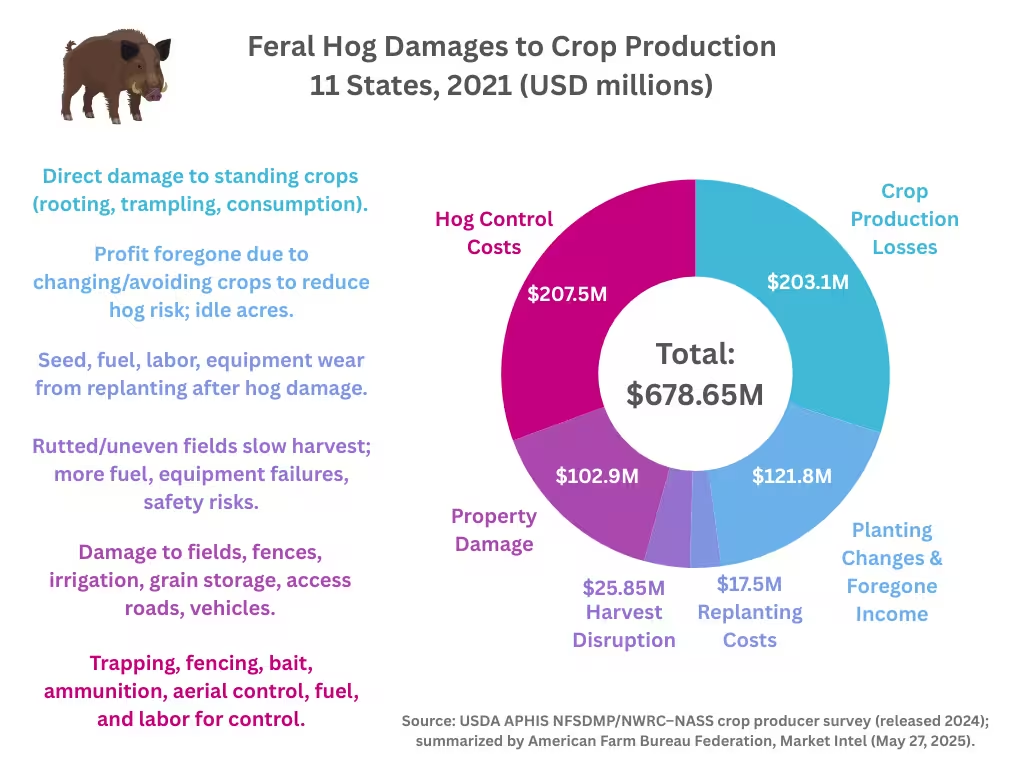
Feral Swine (Wild Hogs) – Feral hogs are widely considered the costliest invasive animal for U.S. agriculture today. Surveys across 11 Southern and Western states found feral pigs caused an estimated $1.6 billion in one-year agricultural losses (including crops, pastures, etc.) . They destroy crops through rooting, trampling, and direct consumption of plants . Wild hogs favor high-value row crops such as corn, peanuts, sorghum, wheat, rice, and soybeans. In affected counties, farmers have seen yield losses of about 6.4% in sorghum and 4% in corn due to hog damage . By value, corn sustains the highest hit (over $92 million lost in one year), followed by peanuts ($38.5M) and soybeans ($23.2M) . Hogs often travel in large groups, uprooting entire rows of crops and devouring seedlings, roots, and fruits, which not only reduces yield but also causes soil erosion and pasture damage . Besides eating crops, feral swine routinely damage farm infrastructure – breaking fences, contaminating water sources, and even damaging roads and irrigation systems – adding over $100 million in property repair costs for crop producers in a year . Many farmers now avoid planting certain crops (especially corn) in areas with pig activity, leading to over $120 million in foregone income because they had to switch to less profitable rotations or leave land idle . In sum, feral hogs represent a multidimensional threat to crops through physical destruction of plants, terrain, and farm infrastructure.
White-Tailed Deer – White-tailed deer are native wildlife that have become one of the most widespread and destructive forces on crops in many regions. Unlike the localized but intense damage of feral pigs, deer cause moderate-to-severe crop losses across almost the entire country. Studies indicate deer are responsible for the largest share of wildlife-related crop damage nationwide – for example, one analysis found deer account for about 58% of all field crop losses due to wildlife, far more than any other species . Deer feed on a wide variety of crops, often browsing at vulnerable growth stages. Farmers report deer routinely eat young corn plants (including tassels before pollination) and soybean shoots, reducing yields per acre . In specialty crops, deer can wipe out vegetable gardens and orchards; a survey in Florida found nearly 30% of watermelon crops were damaged by deer in one season . In the Northeast, many farmers have even abandoned growing high-value produce due to relentless deer foraging . The impact on row crops is equally severe in some areas: in Indiana, deer were found to cause 61% of all documented soybean damage among wildlife causes . Perhaps most striking is the situation in the Southeast’s cotton belt – recent research in Georgia and neighboring states shows whitetail deer are now the number-one pest of cotton, with roughly 33–41% of cotton acreage affected and 34–42% yield losses on those fields due to deer feeding . Georgia cotton farmers are estimated to lose about $150 million annually from deer eating their crop and the costs of mitigation (e.g. fencing, repellents) . Deer typically cause damage by grazing and browsing on crops (leaves, buds, fruits), and they can also trample plants and break stems, especially when traveling in herds. The losses from deer are so pervasive that, in some states like Wisconsin, deer are estimated to cause up to 90% of all wildlife-related agricultural damage . Managing deer overpopulation has thus become a major concern for crop producers, who often resort to increased hunting permits or fencing to protect their livelihoods.
Birds (Blackbirds, Starlings, etc.) – Flocking birds cause substantial crop depredation each year, especially to grains, seeds, and fruit. Species such as red-winged blackbirds, starlings, crows, and wild turkeys feed on crops in the field, pecking at corn ears, sunflower heads, or fruit orchards. The USDA estimates that bird damage to U.S. crops exceeds $150 million annually in direct losses . For instance, blackbirds in the Great Plains can descend on sunflower and corn fields, consuming or spoiling a significant portion of the harvest. In fruit-growing regions, flocks of starlings and other birds can ravage vineyards, berry patches, and orchards, eating the produce before it can be picked. One report noted that European starlings and related pest birds cost agriculture around $800 million a year when considering all grains and feed they consume , although USDA’s more conservative figure is in the hundreds of millions. The mechanism of damage from birds is usually direct consumption of the edible parts of plants (grains, seeds, fruits), as well as pecking damage that can ruin crops beyond what they actually eat. Birds may also knock down plants or carry seeds away. While each individual bird eats only a small amount, large flocks can strip entire sections of a field. Additionally, some crop losses are indirect – for example, birds can spread seeds of weeds or cause cosmetic damage that reduces market quality of fruits. Overall, avian wildlife adds a considerable cost to crop farming alongside the headline mammals like hogs and deer.
Wild predators and other wildlife also impact the ranching sector, causing death or injury to farm animals, feed losses, disease transmission, and infrastructure damage. The greatest monetary losses in U.S. livestock operations stem from predation (wild animals killing or injuring cattle, sheep, poultry, etc.), but other forms of damage like feed contamination and pasture destruction are significant as well. Below are the main wildlife culprits for livestock-related losses and the nature of the damage they cause:
Coyotes and Other Predators – Coyotes stand out as the single most damaging predator to U.S. livestock enterprises. According to USDA surveys, coyotes are responsible for well over half of all livestock losses to predators nationwide . They prey especially on smaller stock such as sheep, goats, and calves. In fact, coyotes kill an estimated 300,000+ head of livestock each year in the U.S. (mostly lambs, kids, and calves) . This makes them the leading cause of predator-related losses, far exceeding losses caused by larger carnivores like wolves or mountain lions. Coyotes typically attack young or vulnerable animals, often targeting newborn or nursing calves and lambs. The financial toll is substantial – collectively, predator attacks (led by coyotes) cost ranchers about $232 million per year in lost animals . For example, a calf or sheep killed is a direct loss of its market value, and there are additional costs if animals are injured and require veterinary care. Other predators contribute as well: domestic/free-ranging dogs are the second-leading cause of sheep losses in some areas, and wolves, cougars, black bears, and bobcats cause localized losses where they are present. In Western states and Appalachia, for instance, wolves and mountain lions do kill cattle or sheep, but their overall impact remains smaller and more region-specific than coyote depredation. Predatory birds of prey can also be an issue – golden eagles have been known to attack young lambs and kid goats, and black vultures in some southern states aggressively target newborn calves. These avian predators are a lesser factor nationally but can be devastating on individual farms. In summary, carnivorous wildlife cause losses primarily via direct predation – killing or mauling livestock – with coyotes being the top culprit by far. Ranchers incur not only the loss of the animals but also time and expense for guard animals, fencing, and other protective measures to deter these predators.
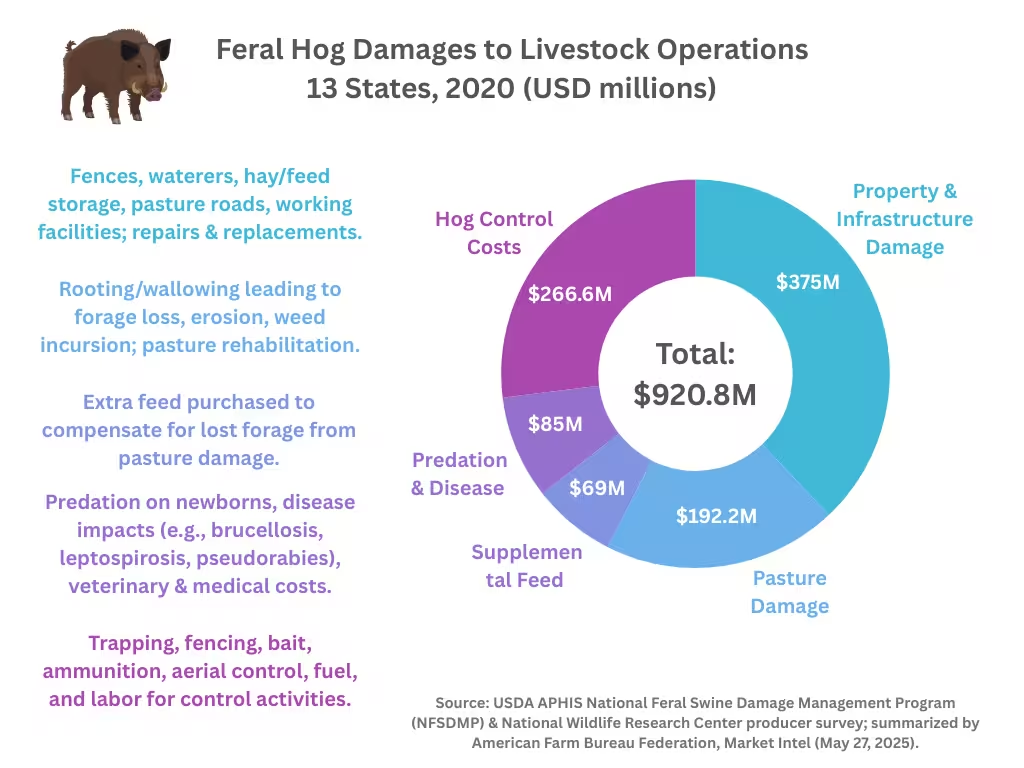
Feral Hogs (Impact on Livestock) – The damage feral swine inflict is not limited to crops; they also create major problems for livestock producers. Wild hogs attack and sometimes kill small livestock (such as lambs, goat kids, and newborn calves) and can even consume the carcasses, making it hard to pinpoint the cause of disappearance . A recent multi-state study estimated feral hogs caused about $85 million in direct livestock losses in one year through a combination of predation and disease impacts . Cattle operations suffered the largest dollar losses (around $61 million) from hog-related issues, partly because cattle are high-value animals . Hogs may not often take down healthy grown cattle, but they will prey on calves or debilitated animals and compete with cattle for feed and water sources. More insidious is the disease risk – feral swine carry at least 30 viral and bacterial diseases and nearly 40 parasites transmissible to livestock (and humans) . They spread diseases like pseudorabies, brucellosis, leptospirosis, and others to farm animals , which can cause reproductive losses, illness, and expensive testing/quarantine protocols. Another huge impact is on pastureland: hogs relentlessly root up pastures used for grazing, destroying forage and tearing up soil. In the same study, producers reported roughly $193 million in damages to pastures in a year due to hog activity . This includes the cost of re-seeding grass, soil erosion repair, and over $69 million spent on extra feed to replace the grazing lost to pasture destruction . Feral swine also damage fences, water troughs, and farm structures on ranches – in Texas alone, hogs caused an estimated $375 million in property damage on livestock operations in one year (e.g. breaking fence lines, ruining feeders and water systems, gouging deep wallows that damage farm equipment) . In sum, feral hogs harm livestock enterprises through both direct predation and extensive indirect damage (habitat destruction and disease), making them a uniquely challenging threat that straddles the crop and livestock sectors.
Birds at Livestock Facilities – Certain pest birds create problems not by killing livestock, but by consuming and contaminating livestock feed. Flocks of starlings, pigeons, and sparrows are notorious for invading feedlots, barns, and dairy operations. They eat large quantities of the grain and protein supplement intended for cattle or poultry, effectively raising feed costs for producers. Research in the Plains states found that a flock of just 1,000 starlings can eat about 1.5 tons of cattle feed in a winter (roughly $200–$400 worth) . Starlings tend to pick out the high-value ingredients (e.g. corn, protein pellets) from cattle rations , causing nutritional losses beyond the weight of feed consumed. On dairies, it’s estimated each starling consumes ~1 pound of feed per month from the bunk, so a large flock can significantly reduce what’s left for the cows . Aside from feed consumption, birds foul feeding areas and waterers with droppings, which can spread diseases to livestock. Starlings and pigeons are known carriers of pathogens like Salmonella and Cryptococcus that can infect cattle or contaminate milk . Nationwide, bird infestations at livestock facilities are estimated to cost about $100 million annually in feed losses and related costs . This is an often overlooked aspect of wildlife damage – the economic loss from wild birds essentially “stealing” feed and reducing feed efficiency in beef and dairy production. While not as immediately dramatic as a predator attack, chronic bird depredation can hurt a farm’s bottom line over time. Farmers combat this by installing bird netting, noise cannons, or by routinely culling invasive birds (note: species like starlings and pigeons are not legally protected, so controlled removal is allowed) . It illustrates that not all wildlife damage in ranching is via direct attacks on animals; some of it comes from wildlife competing with livestock for resources.
Wildlife-caused damage is a major economic challenge for U.S. agriculture, affecting everything from corn fields and vineyards to cattle ranches and poultry farms. The most damaging species include white-tailed deer and feral hogs on the crop side, and coyotes and other predators on the livestock side, with birds contributing significantly in both realms. All told, recent data suggest that wildlife damage and control efforts easily cost American farmers well over a billion dollars each year . These losses occur through diverse mechanisms: deer browsing and crop raids, hogs trampling and rooting up fields, coyotes preying on young livestock, and even birds eating feed grain. Each of these issues demands different management strategies – from improved fencing and targeted hunting to large-scale population control programs. The rise in feral swine populations and persistently high deer densities in many areas underscore the need for effective wildlife management and support for farmers. By understanding which animals cause the most damage and how, producers and policymakers can better target mitigation measures. The ultimate goal is to strike a balance where both agriculture and wildlife can thrive: reducing undue economic hardship on farmers while responsibly managing wildlife populations to minimize conflicts.
Sources: Recent USDA and state reports, research studies, and farm industry analyses have been used to compile these figures and trends. Key data were drawn from USDA APHIS Wildlife Services summaries , Farm Bureau economic analyses , and university/extensional research on crop damage . These sources provide the most up-to-date and documented insights (post-2020) into the scope of wildlife damage in the United States.