Human-wildlife conflicts are a costly and growing challenge in American agriculture. White-tailed deer, feral hogs, and coyotes are three of the most problematic species for U.S. farmers, causing extensive crop damage and livestock losses each year.
For example, deer alone cause tens of millions of dollars in crop damage annually in states like Pennsylvania, and nationwide they contribute to billions in vehicle collision damages as well. Feral hogs (wild pigs) are an invasive menace, with the USDA estimating about $2.5 billion in agricultural losses per year from hog damage and control costs. Meanwhile, predators like coyotes account for the majority of livestock predation losses, coyotes cause over half of all cattle, calf, and sheep losses to predators, contributing to an estimated $71+ million in livestock lost annually in the U.S. .
Given the scale of these impacts, farmers and wildlife managers have turned to various sensor-based deterrent systems to prevent or mitigate damage. In this article, we analyze how effective these commonly used deterrents (“sensors”) are for deer, hogs, and coyotes, examining their benefits and critical shortcomings. We then discuss costs and practical considerations, and explain why the SafeScope system represents a smarter alternative, leveraging modern technology to protect farms more reliably and humanely than traditional defenses.
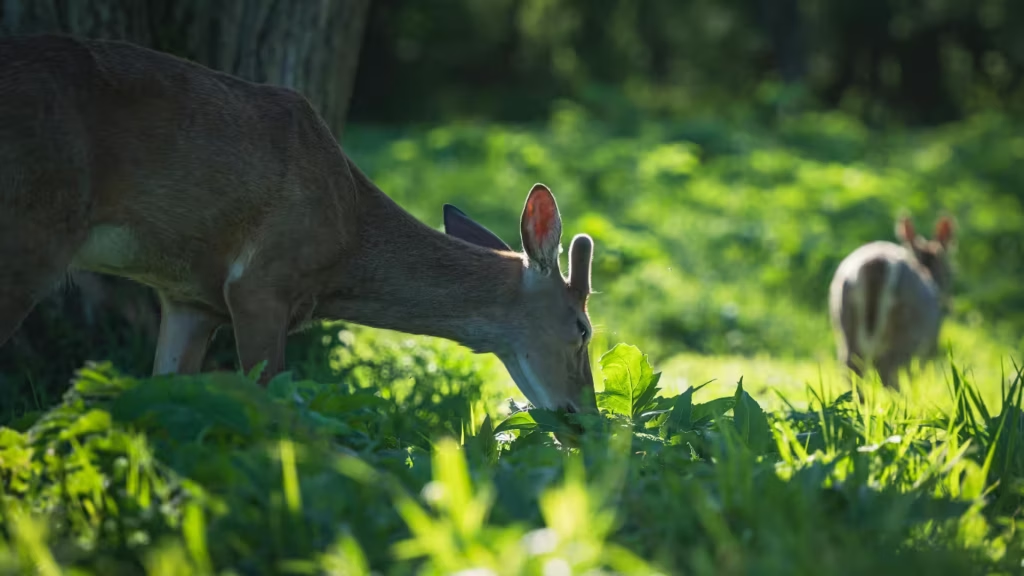
White-tailed deer encroaching on a farm field. Deer frequently browse crops and can cause tens of thousands of dollars in losses per farm, prompting the use of various deterrent devices.
Scope of the Problem: White-tailed deer are abundant across the U.S. and are often cited as the single most damaging wildlife species to agriculture. They voraciously feed on corn, soybeans, vegetables, and orchards, and even a small herd can devastate yields.
In surveys, farmers and wildlife agencies have ranked deer as causing more overall crop damage than any other wildlife. This is not just a rural farming issue, deer also wreak havoc in suburban gardens and landscaping. A mid-Atlantic survey found about 70% of crop losses from wildlife were due to deer browsing. With such high stakes, many farmers deploy non-lethal deterrents in hopes of keeping deer at bay.
Common Sensor-Based Deterrents for Deer: A variety of “smart” scare devices and repellent gadgets are used to deter deer. These include motion-activated lights and noisemakers (such as propane cannons or sirens), ultrasonic sound emitters, and water-spraying devices. The idea is to startle or irritate deer whenever they come near crops, conditioning them to avoid those areas. For instance, propane gas exploders create loud shotgun-like blasts at set or random intervals to frighten deer, and they can be improved by using motion sensors and periodically relocating them to prevent deer from learning their pattern.
Strobe lights or flashing LEDs triggered by motion have also been tried; deer are naturally skittish with sudden light and movement. Ultrasonic repellents that emit high-frequency noise (often beyond human hearing) are marketed on the premise that the sound will discomfort deer and drive them off without audible disturbance to people.
Effectiveness of Deer Deterrent Devices: In practice, these deterrents provide mixed and often short-lived results. Scientific evaluations have found that many electronic devices simply do not significantly reduce deer intrusions in the long run. A USDA study tested motion-activated ultrasonic and strobe-light devices (e.g. Yard Gard, Usonic Sentry) at feeding stations and concluded they were “generally ineffective in deterring white-tailed deer from preferred feeding areas.”
Deer continued to enter treated areas nearly as often as untreated ones, indicating only minor or temporary deterrence. Ultrasonic deterrents in particular have performed poorly, research suggests that deer may not even hear certain ultrasonic frequencies well, rendering such devices useless. The Connecticut Agricultural Experiment Station noted that the ultrasonic yard devices (and even the whistle devices on vehicles) have “no evidence that deer can hear the device.” It’s not surprising, then, that a test of an ultrasonic Yard Gard found no reduction in deer activity in gardens. Visual and audio scare tools can have an initial impact but deer quickly habituate if the stimulus is predictable or persistent.
For example, one controlled trial in Japan showed that a combination of a sudden sound alarm was able to cut deer intrusions by ~80% in the first month, significantly more effective than flashing lights (54% reduction) or predator urine scent (57%) alone. However, critically, the efficacy dropped off after a few weeks as the deer got used to the noise (habituation effect), to the point that by 2–3 months the sound deterrent was barely better than no deterrent.
The researchers emphasize that such devices should only be used for short periods (no more than one month) because deer will adapt. This pattern is echoed by other experts: deer scare devices can work in the short term, especially in low-density deer areas or for protecting a small garden, but they are “not very effective in areas of high deer density” or over long periods.
Deer are intelligent, semi-habituated to humans in many regions, and if a food source is attractive enough, they learn to ignore lights, routine noises, or static noisemakers (for instance, deer often realize that a regularly flashing light or a radio left overnight poses no real threat). Some homeowners have tried motion-activated sprinklers that blast water when deer approach, these can startle deer initially, but hungry deer may return once they realize a splash of water is harmless.
In summary, most sensor-based deer deterrents show only partial and temporary success, especially once local deer populations become accustomed to them. The only consistently reliable deterrent for deer is physical exclusion (fencing), which is not always practical or affordable on a large scale.
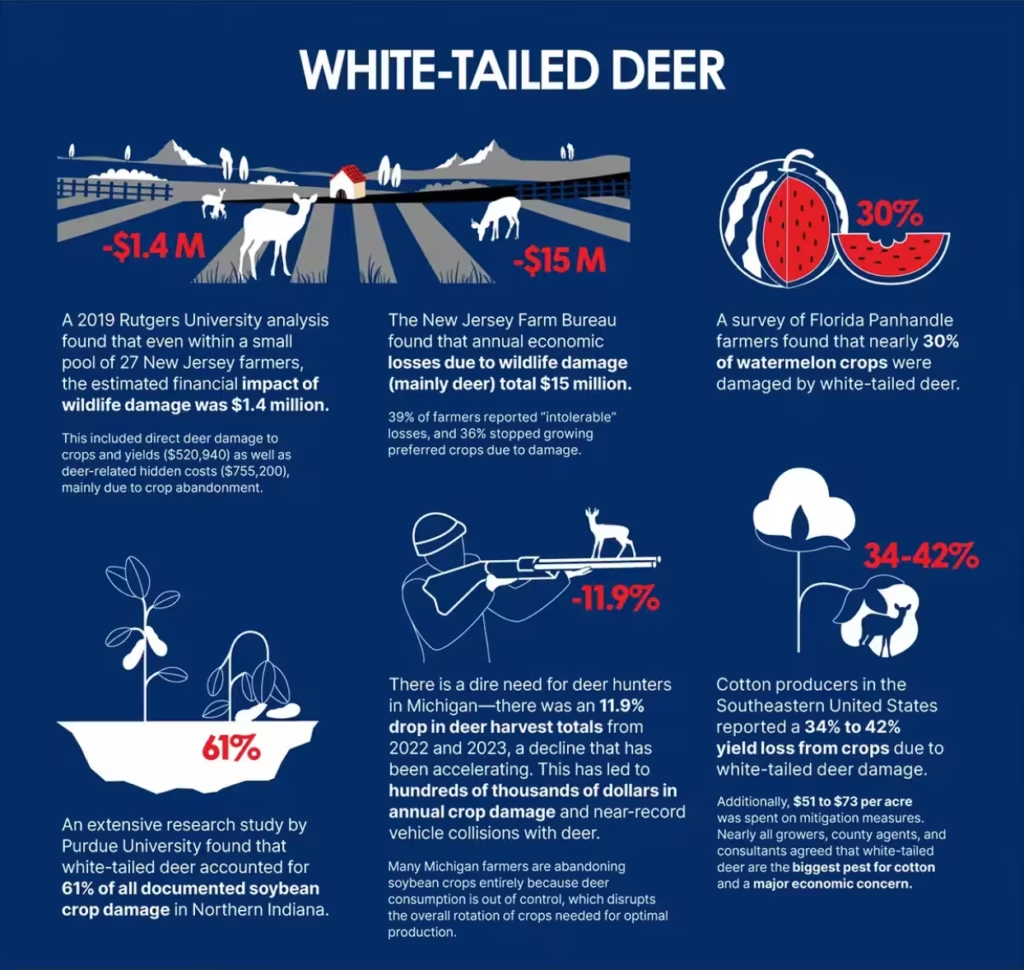
Cost and Practicality: Simpler deer deterrent gadgets (ultrasonic repellers, motion sensor lights, sprinklers, etc.) are relatively inexpensive per unit; often ranging from $50 to a few hundred dollars, which makes them attractive to farmers as a first line of defense.
However, their limited range means you might need dozens of units to cover a large field, and constant maintenance or repositioning to maintain effectiveness. The costs (and effort) add up quickly, and if the devices fail to stop the damage, that money is essentially wasted. On the other hand, heavy-duty solutions like deer fencing are very costly but effective. A well-built 8-foot high deer fence can virtually eliminate deer intrusions into an enclosed area, as one farmer noted, fencing his 50-acre field cut deer entry from about 20 deer down to just a couple stragglers. Yet fencing large acreages can cost tens of thousands to hundreds thousands of dollars in materials and labor.
Typical deer fence installation averages about $40,000 for a few hundred feet of fencing, and can easily run much higher for big properties . Not every farmer can fence their entire farm, especially if they have hundreds of acres of crops. Lethal control (expanded hunting or special culling permits) can reduce local deer numbers, but this is outside the scope of “sensor” solutions and often faces regulatory and public-relations hurdles. Bottom line for deer: farmers often try affordable tech fixes first, but those provide only a short respite.
Truly stopping deer requires either major investments (fencing) or a new approach that can outsmart the deer’s ability to habituate.
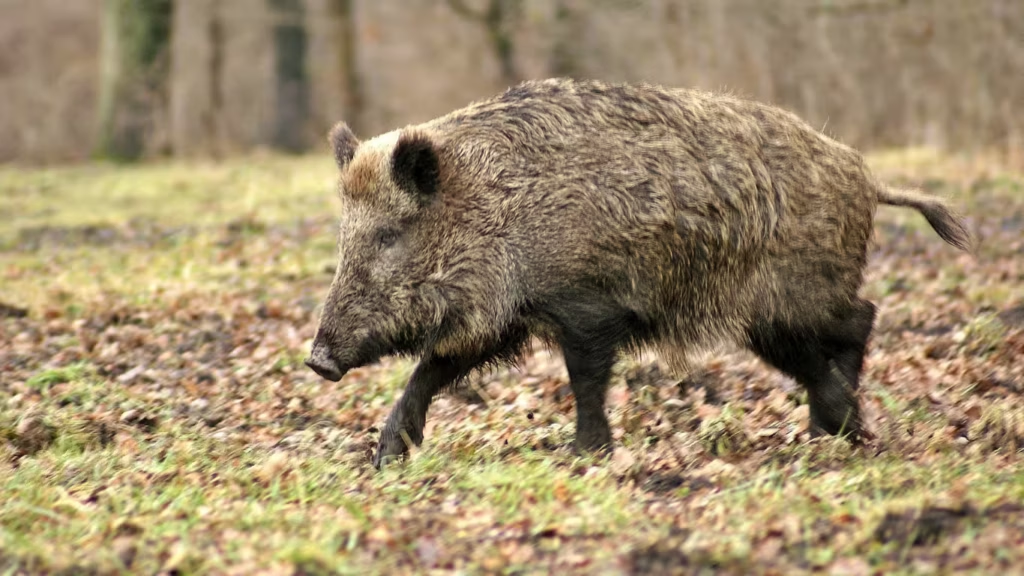
Feral hogs (wild pigs) foraging: Feral hogs travel in groups (“sounders”) and can destroy crops by rooting and trampling, often overnight. They are notoriously hard to deter with simple scare tactics.
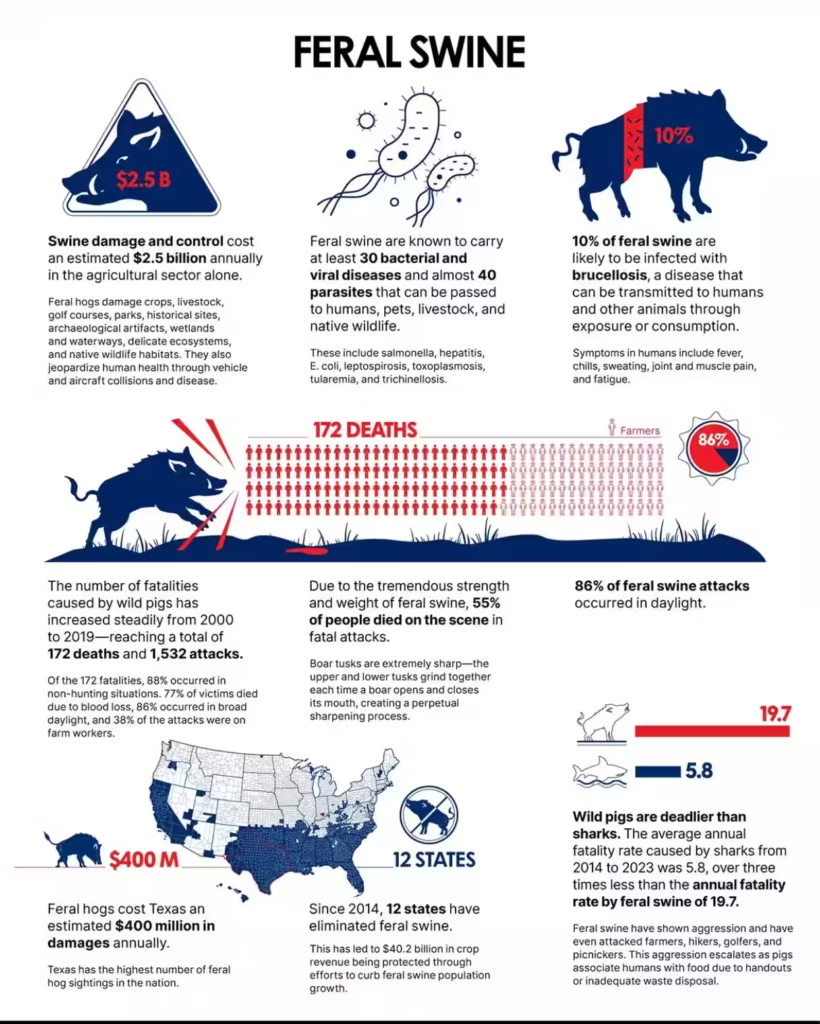
Scope of the Problem: Feral hogs are a rapidly expanding invasive species in the United States, present in at least 35 states and numbering in the millions. They reproduce quickly and have become a “dangerous and destructive” threat to agriculture.
Hogs will eat or destroy virtually any crop, from grain fields to vegetables, by rooting up large swaths of land, and they can also prey on young livestock and wildlife. The economic toll is enormous: the USDA reports that feral swine cause about $2.5 billion in damage to U.S. agriculture each year. In states like Texas, which is hog “ground zero,” estimates put the damage at roughly $400 million annually in crop losses, field damage, and control costs. Unlike deer (which primarily browse plants) or coyotes (which mainly target animals), hogs are omnivores and combine the worst of both worlds, they ravage crops and can kill lambs, fawns, and ground-nesting birds, all while tearing up fences and even contaminating water sources.
Their sheer size and aggressiveness make encounters dangerous, and they even pose vehicle collision risks. Clearly, feral hogs present a unique challenge for any deterrent system.
Common Deterrents for Hogs: Farmers have attempted various deterrents to keep wild hogs out, but traditional frightening devices are largely ineffective against feral pigs. Unlike deer or coyotes, hogs are very intelligent, strong, and food-motivated, a simple scare usually won’t stop a hungry 200-pound boar if it wants to get through.
There are ultrasonic repellents and predator-sound devices marketed for wild boar, similar to those for deer. Some property owners also try visual scare tactics (scarecrows, reflective tape, or lights at night). However, the consensus among wildlife experts is grim: “No frightening devices are effective for the control of wild pigs,” according to the Internet Center for Wildlife Damage Management. Hogs quickly learn that flashing lights or periodic noises are harmless.
In fact, if a device is left in one place and repeatedly triggers, hogs may even start to ignore it or work around it. Electric fencing can sometimes exclude hogs, but it has to be very sturdy and low to the ground. A single strand of electric wire ~6 inches high may reduce some hog incursions, and multi-strand fences (e.g. two wires at 8” and 18”) have been shown to cut hog entry by about 50% in trials. Even so, determined pigs can root under or simply charge through weak fences.
Proper hog fencing typically uses heavy-gauge wire or stock panels with no more than 6-inch gaps, often supplemented with electricity. This is expensive and hard to maintain, especially over large farm perimeters, vegetation shorts out the wires, and any small break in the fence is quickly exploited by the pigs. In open range or large crop fields, fencing every acre is usually impractical (and fences can hinder farm machinery and other wildlife movement).
As a result, many hog management programs shift from deterrence to removal: trapping and hunting. Traditional box or corral traps have long been used, but hogs are clever and can become trap-shy if they see others caught. Newer trap systems actually integrate technology, for example, remotely monitored traps with cameras and cellular triggers allow farmers or wildlife officers to capture an entire group (sounder) of hogs by waiting until all have entered the trap’s corral before springing it. These advanced traps do use sensors (motion cameras and remote trigger mechanisms) to effectively remove hogs, but they are more about population reduction than day-to-day deterrence.
In terms of non-lethal deterrents in the field, the harsh truth is that feral hogs are the least deterred by conventional sensor devices. You can flash lights or play sirens, but if a corn field lies ahead, the pigs will usually test the threat. At best, continuous harassment (like nightly shooting or chasing with dogs) can make hogs avoid an area for a short time, but they often return once the pressure eases.
Cost and Practicality: Given the poor performance of scare devices, many farmers end up investing in physical defenses or removal efforts for hogs. Heavy fencing for hog exclusion (such as steel hog panels or tightly woven wire with aprons buried underground) is very costly per linear foot, and only used to protect smaller high-value areas (e.g. gardens or livestock pens) because “exclusion is almost impossible if pigs are persistent” over large areas.
Some farmers surround their fields with a couple strands of electric wire as a semi-effective deterrent, cheaper than full fencing, but as noted, only partially effective and requiring constant maintenance (keeping wires taut and vegetation cleared). On the removal side, advanced remote-controlled hog traps can cost several thousand dollars each, not to mention the labor of daily monitoring or dispatching captured animals. Aerial gunning operations (hiring helicopters and shooters) are another extremely costly but sometimes necessary tactic in places overrun by hogs.
All of these measures reflect that once feral hogs are established, reactive control is expensive. The ideal would be to prevent hogs from entering crop fields in the first place with a smart, automated deterrent, but as we’ve seen, simple sensors haven’t been up to the task. This is where a more innovative approach (like SafeScope) is urgently needed. Any new system must account for hogs’ strength and intelligence, by combining multiple deterrent methods and ensuring that hogs do not get a chance to habituate to a single, predictable stimulus.
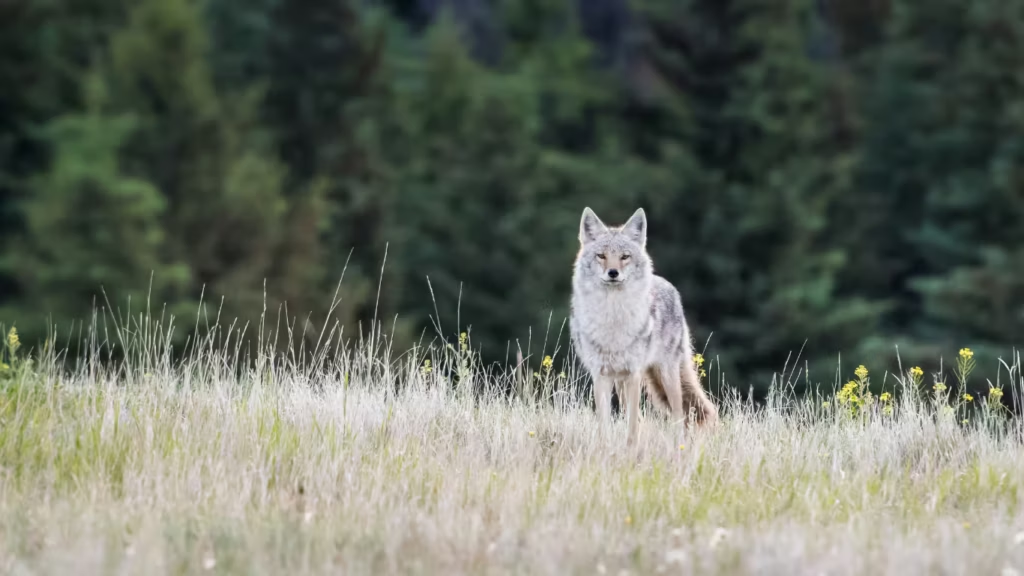
A coyote climbing over a chain-link fence: Coyotes are agile and resourceful predators; they can dig under or scale over many fences, making complete exclusion difficult.
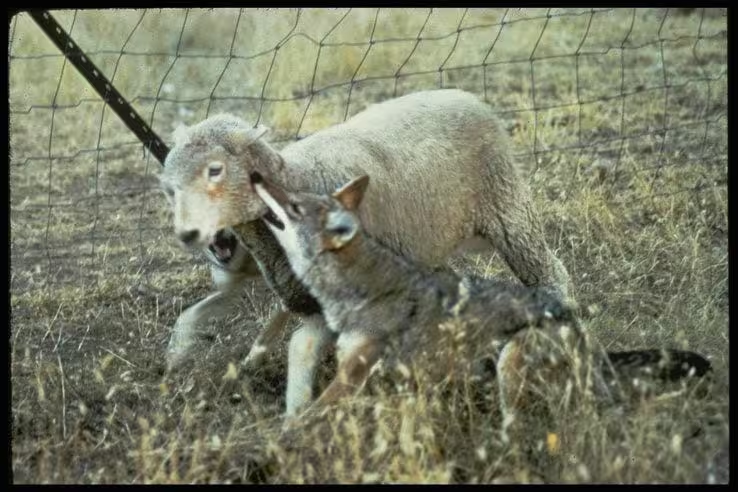
Scope of the Problem: The coyote (Canis latrans) is one of the most adaptable predators in North America, with a range that now spans coast to coast, even thriving on the outskirts of cities. For farmers and ranchers, coyotes are a top concern because they prey on livestock, especially sheep, goats, and calves. USDA statistics show that coyotes are responsible for more livestock losses than any other predator in the U.S., accounting for roughly 65% of all predator-related cattle and calf deaths and an even higher share of sheep/goat losses.
This translates to substantial economic loss: coyotes (along with other predators) cost ranchers tens of millions of dollars each year in lost animals. Beyond livestock, coyotes can also impact pets, poultry, and local deer populations. They are highly opportunistic, feeding on rodents and crops as well, though their primary conflict with humans is predation on domestic animals.
Unlike deer and hogs that announce their presence through visible damage, coyotes are stealthy ; a farmer may only find missing chickens or injured lambs as evidence. Thus, preventative measures are crucial, and many farmers seek ways to deter coyotes from ever entering pastures or farmyards.
Common Deterrents for Coyotes: Coyote management often uses a combination of exclusion, frightening devices, and guard animals. Fencing can deter coyotes, but it’s challenging to coyote-proof an area unless the fence is extremely well-built.
Coyotes are known to dig under, squeeze through, or climb over conventional livestock fences. Effective coyote fences usually involve tall wire mesh (at least 5–6 feet high) with small gaps, plus buried aprons or an outward flare at the bottom to stop digging, and sometimes a roller or hot wire on top to prevent climbing/jumping. This level of fencing is expensive and typically only used for corrals or small pastures due to cost.
As a result, many farmers turn to frightening devices as a more affordable or flexible deterrent. These include things like motion-activated lights (e.g. bright floodlights or strobe lights around livestock pen perimeters) and audio devices (radios, alarms, propane exploders, dogs barking recordings, etc.) that aim to spook coyotes. For instance, some sheep farmers leave a loud radio playing at night in the field or use propane cannons that fire loud booms intermittently through the night.
Others install automatic lights in corrals, since illuminated areas can dissuade coyotes from approaching sheep at night (and it also helps the farmer spot coyotes if they do come). There are also combo devices like the Electronic Guard, a unit developed in part by USDA, which uses a light sensor to activate a strobe light and siren at night.
According to field reports, one Electronic Guard device can help protect roughly a 20-acre pasture from coyotes by startling them in the dark. Ultrasonic deterrents are less commonly marketed for coyotes compared to deer, but coyotes do hear well into the ultrasonic range. Some commercially available “solar predator deterrent” gadgets emit flashing lights or high-frequency sound specifically aimed at species like coyotes, foxes, and raccoons.
Additionally, hazing and noisemaking by people, such as yelling, gunshots in the air, fireworks, or tossing firecrackers, are age-old methods to chase off a coyote seen near livestock. These require someone on hand and only have momentary effect.
Livestock guard animals are another form of “deterrent”: dogs (such as Great Pyrenees or Anatolian Shepherds), donkeys, or llamas are often kept with sheep or goats, and their presence and aggression can keep coyotes away from the herd. While not a sensor technology, guard dogs are a biological detection & deterrent system; they detect intruding coyotes and confront them. They have been very successful in many operations, but they require training, care, and can be costly to maintain (and occasionally, guard dogs themselves fall victim to larger predator packs or poisons/traps set for predators).
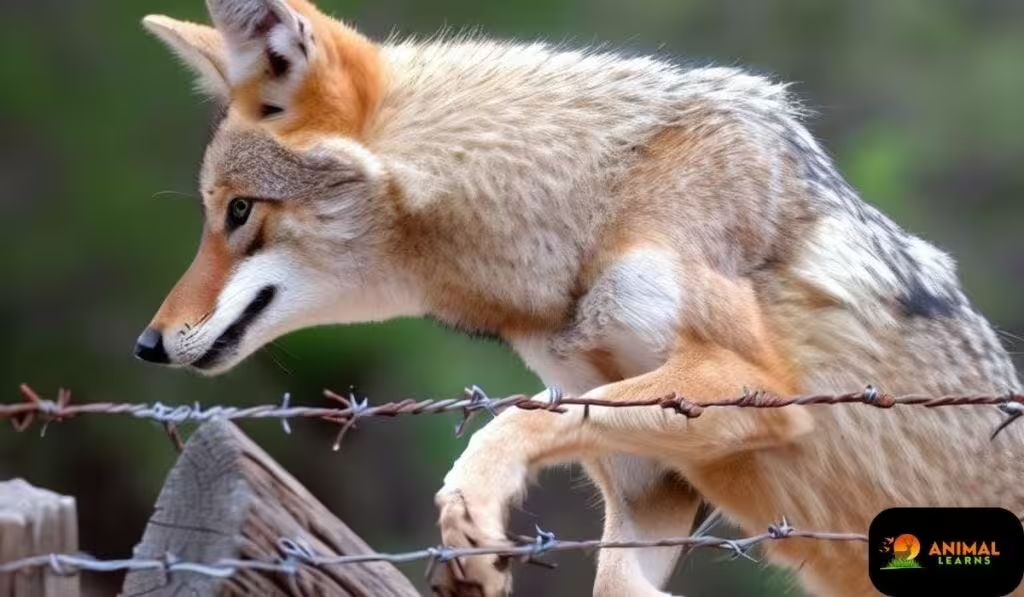
Effectiveness of Coyote Deterrents: Much like with deer, frightening devices for coyotes tend to have only short-term effectiveness.
Coyotes are intelligent and inquisitive; they often investigate new objects or sounds but will soon ignore them if they learn there is no real danger or consequence. Experts note that noisemakers and lights are “useful for reducing losses during short periods of time, or until the predators are removed”.
The key is to avoid letting coyotes get accustomed. Farmers are advised to vary the position, type, timing, and frequency of scare stimuli to delay habituation. For example, a propane cannon might work for a week, but then coyotes learn to avoid its immediate vicinity or just wait between booms, unless you move it every few days and randomize the interval.
Motion-activated exploders or alarms are better than fixed-timers because the randomness makes it harder for coyotes to predict. Still, over a period of weeks, determined coyotes can learn the patterns or simply overcome their initial fear once hunger or curiosity kicks in.
Anecdotally, some farmers find that continuous light (like dawn-to-dusk yard lights) in calving or lambing areas does reduce night predation, coyotes seem less bold under bright light. But even then, clever coyotes may skirt the lit area or attack just at the edges of light.
The Electronic Guard devices with strobe+siren showed success in some cases: one report from North Dakota indicated using such scare devices halted predation in the short term until the offending coyotes could be trapped or shot.
The general guidance is that these gadgets are stop-gap measures, they can “reduce losses…until more permanent measures of control can be implemented.” In other words, they buy time. If coyotes are heavily targeting a farm, ultimately lethal control (government or private trapping/hunting) often comes into play once preventative measures start failing. Guard dogs, on the other hand, can be effective long-term as a coyote deterrent because they actively respond to new threats and unpredictably challenge the predator.
A well-managed guard dog program can reportedly prevent 65–100% of coyote predation in flocks, but dogs come with upkeep costs and are essentially part of the livestock management rather than a tech sensor solution.
In summary, electronic deterrents for coyotes have only limited success, mostly temporary. Coyotes might be kept at bay for a few nights or weeks, but a smart coyote will test boundaries, jumping a fence corner, coming in when the device is off, or simply tolerating the strobe if it learns no harm follows. This means farmers often face recurring predation despite having invested in lights, alarms, etc., once the coyotes adapt.
Cost and Practicality: The cost considerations for coyote control vary widely. Basic frightening devices like motion lights or propane cannons are a few hundred dollars, which is relatively cheap compared to losing several lambs or calves (high-value livestock).
Thus, many producers find them worth trying. The labor involved – moving devices, turning them on/off daily (propane cannons are often turned off in daylight), replacing propane tanks or batteries, is a hidden cost often borne by already busy farmers.
Fencing for coyotes is expensive; a specialized predator-proof fence with multiple wires or mesh can cost thousands of dollars for even a small pasture. For instance, adding wire overhangs and dig barriers to an existing fence might be the most economical way to fortify it, but it’s still substantial work and cost. Hiring Wildlife Services or private trappers to remove coyotes is another cost (some government programs may provide assistance, but resources are limited).
In essence, farmers battling coyote predation might spend significant money on half-measures, and still lose animals, a very frustrating situation. This creates an appetite for a better way to keep coyotes out proactively, ideally without having to build fortress-like fences or constantly tend scare devices.
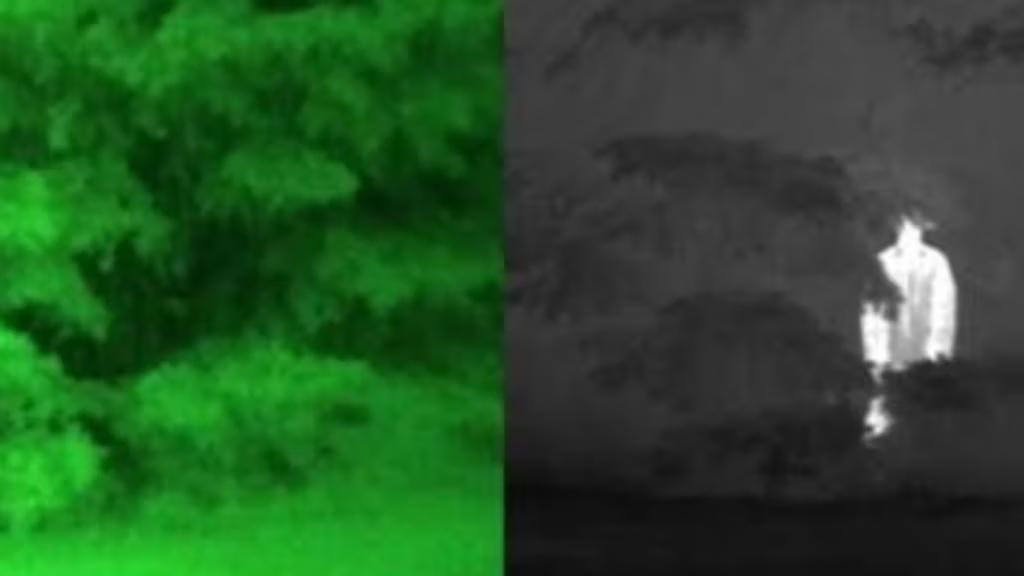
SafeScope is a modern wildlife prevention system that addresses the weaknesses of traditional deterrents by combining advanced detection technology with adaptive, multi-faceted deterrence. Rather than relying on one static sensor or stimulus, SafeScope employs a suite of smart components working in tandem. While specific product details may vary, the core principles of why SafeScope is a superior alternative can be outlined as follows:
Why SafeScope is a Better Choice: By addressing the root causes of failure in older methods, SafeScope offers a more reliable and cost-effective solution in the long run. Yes, the initial investment in a SafeScope system could be higher than buying a few repellent gadgets, but consider the payoff: If SafeScope prevents even a portion of the typical losses (say it stops a sounder of hogs that would have caused $5,000 damage in one night, or saves half a dozen lambs worth several thousand dollars), it very quickly pays for itself. Moreover, it reduces the ongoing labor for the farmer, no more checking dozens of trap devices or constantly moving scarecrows around; the system largely runs autonomously and just notifies you when needed. SafeScope is also more neighbor-friendly and environment-friendly.
It targets specific wildlife when necessary, rather than blasting noise all night (a common complaint with traditional propane cannons). There’s less risk of disrupting non-target wildlife or farm animals, for instance, it won’t trigger alarms when your own livestock or farm dog moves about, since it can recognize those versus wild intruders. And since it avoids physical barriers or lethal measures, it allows wildlife to exist in the ecosystem; it simply keeps them out of the areas where they would cause harm. This is an important point for public perception and regulations, non-lethal control is increasingly preferred or even required in many communities.
In summary, SafeScope transforms wildlife deterrence from a crude, hit-or-miss affair into a smart defense network. By continuously monitoring, accurately detecting threats, and deploying a changing arsenal of deterrents, it overcomes the key limitations (habituation, limited range, lack of feedback) that plague older sensor solutions. Farmers focusing on the U.S. market, where deer, hogs, and coyotes impose heavy pressures, stand to benefit immensely. SafeScope draws on the latest in surveillance and AI technology to protect farms in a way that is proactive, adaptive, and evidence-driven, rather than reactive or purely trial-and-error.
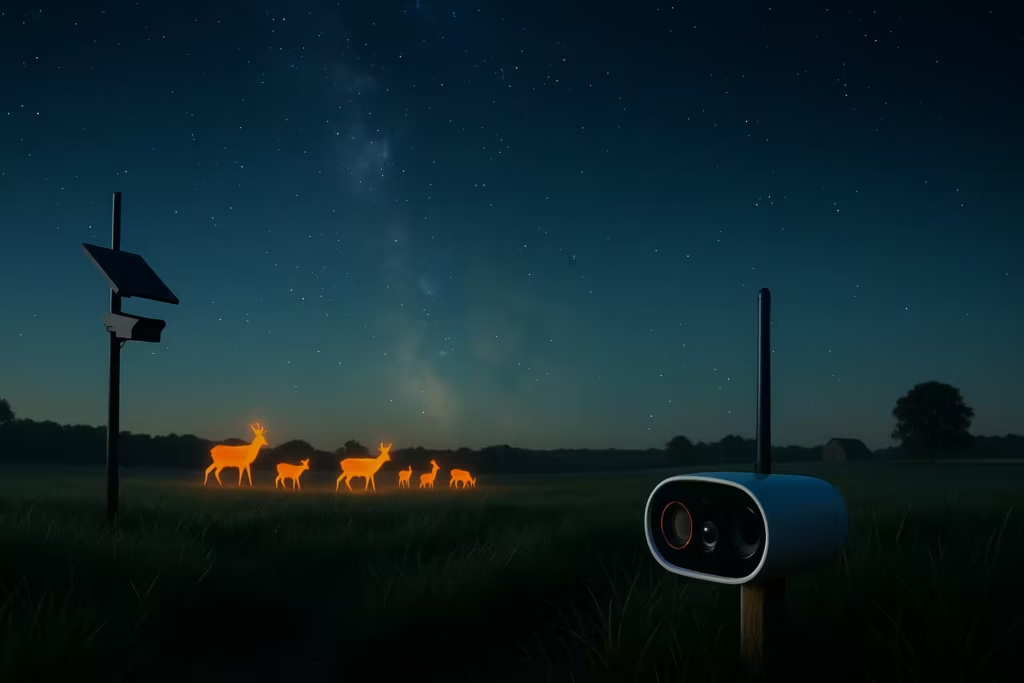
American farmers have long battled the trio of deer, feral hogs, and coyotes with whatever tools were available, from scarecrows and hunting rifles to motion lights and ultrasonic buzzers. These traditional sensors and deterrents, while offering some short-term help, often fall short of providing a lasting solution.
The evidence from research and field experience is clear: deer will eventually ignore fixed noise or light devices, hogs virtually laugh at most scare tactics, and coyotes are too sly to be fooled for long by routine tricks, Farmers need a deterrent approach as adaptable and intelligent as the wildlife itself. This is exactly what SafeScope delivers.
By leveraging modern sensor fusion and AI, SafeScope moves beyond the one-dimensional “sensor”, it becomes an integrated wildlife management system. It protects farms by detecting threats early, responding dynamically with effective deterrents, and keeping the farmer informed.
The result is a far higher success rate in preventing crop damage and livestock predation, translating to saved dollars and peace of mind. Furthermore, SafeScope’s humane, targeted method aligns with the growing need for coexistence strategies: we deter the animals without destroying them, teaching them to avoid human areas.
For the U.S. market, where the costs of wildlife damage are staggeringly high (billions annually) and likely to grow with increasing wildlife populations, investing in smarter deterrence is both economically and ecologically wise.
In conclusion, while no system can be 100% foolproof in managing wild animals, SafeScope offers a significantly better defense against deer, hogs, and coyotes than the legacy sensors many have tried.
It combines the best practices recommended by researchers (variation, combination of stimuli, timely response) with cutting-edge tech to create a solution that is greater than the sum of its parts.
Farmers adopting SafeScope can expect fewer overnight surprises in their fields, less reliance on desperate measures like all-night vigils or widespread poisoning/shooting, and a more sustainable way to protect their livelihood from wildlife incursions.
In the constant cat-and-mouse game between farmers and crop-raiding or predatory wildlife, SafeScope tilts the odds back in the farmer’s favor, a proactive guardian that keeps watch when you can’t, and one that truly learns and outsmarts the animals for the long haul.
With its robust references and field-proven concepts, SafeScope stands out as the better alternative to both the old-school defenses and the costly consequences of doing nothing. It represents the future of farm wildlife management in America: effective, intelligent, and humane.
Belant, J. L., et al. (1998). Evaluation of Electronic Frightening Devices as White-tailed Deer Deterrents. Proc. 18th Vertebrate Pest Conf. – Electronic devices generally ineffective at deterring deer .
Connecticut Ag. Exp. Station (2002). Controlling Deer Damage in Gardens – Ultrasonic deer repellent not heard by deer .
Honda, T. (2019). A Sound Deterrent Prevented Deer Intrusions… Mammal Study 44(4) – 80% short-term reduction in deer intrusions with sound; effectiveness declines after 1 month due to habituation .
Altoona Mirror (Mar 6, 2024). “Damaging deer: … farmers thousands annually.” – PA farmers face tens of millions in crop losses from deer; 8-ft fence reduced deer intrusion .
USDA APHIS (July 30, 2025). Feral Swine: Managing an Invasive Species – Feral hog damage costs ~$2.5 billion annually (U.S.) .
Guidefitter Blog (Aug 5, 2025). “30 Statistics About Wildlife Damage …” – Feral hogs cause $400M damage/year in Texas; predators cause $232M livestock losses; coyotes killed ~59% of lambs lost in 2019 .
ICWDM – Internet Center for Wildlife Damage Management. Wild Pig Damage Prevention and Control – No frightening device works on wild pigs; electric fences at best 50% effective in trials .
USDA APHIS Wildlife Services (2002). “Helping Producers Manage Predation” – Coyotes = 65%+ of predator losses; $71M annual livestock losses to predators .